
Signed vs Unsigned Hex: The Difference That Breaks Debug Sessions
A practical guide to interpreting the same hexadecimal value in signed and unsigned decimal contexts.
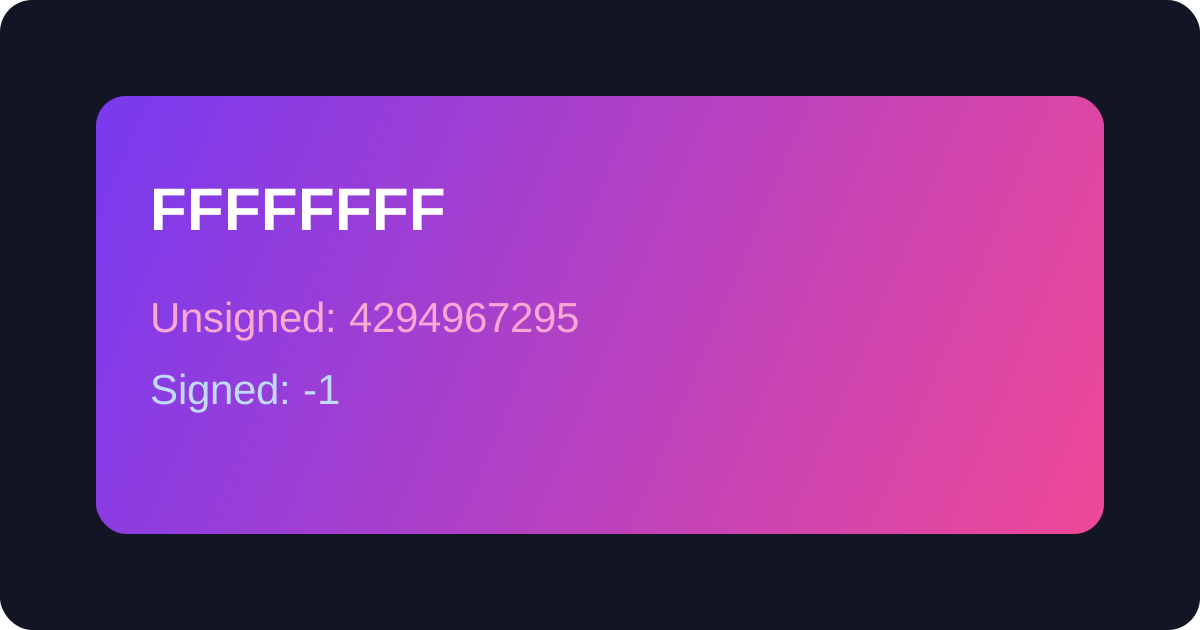
The value FFFFFFFF can represent 4294967295 or -1. Both are correct. The deciding factor is the system that produced the value and the width you are using to interpret it.
Unsigned interpretation
Unsigned values treat every bit as magnitude. This is common when you are dealing with raw addresses, colors, or identifiers.
Signed interpretation
Signed values use a high bit to signal negativity in two’s complement systems. That is why the same hexadecimal sequence can map to a negative decimal result.
Best practice
Always pair the conversion with the bit-width assumption and intended context. Without that, teams may argue about arithmetic when the real issue is interpretation.
Related posts

Education
Why Support Teams Need Decimal Output Even When Engineers Think in Hex
Decimal translation helps product, support, and operations teams communicate issues without losing technical accuracy.
Education
Bit-Width Assumptions That Quietly Change Your Decimal Result
The same hexadecimal value can mean very different things depending on width, sign, and context.
Education
Teaching Number Systems with Better Visual Feedback
Students grasp base conversion faster when tools show clean structure, contrast, and immediate results.